Do You Know How to Protect Yourself from Bad SEO Tactics?
If an SEO vendor promises “quick wins,” watch what happens next.
The most common shady behavior I see isn’t always obvious on the surface. It’s hidden in what they do with backlinks and directory listings (citations).
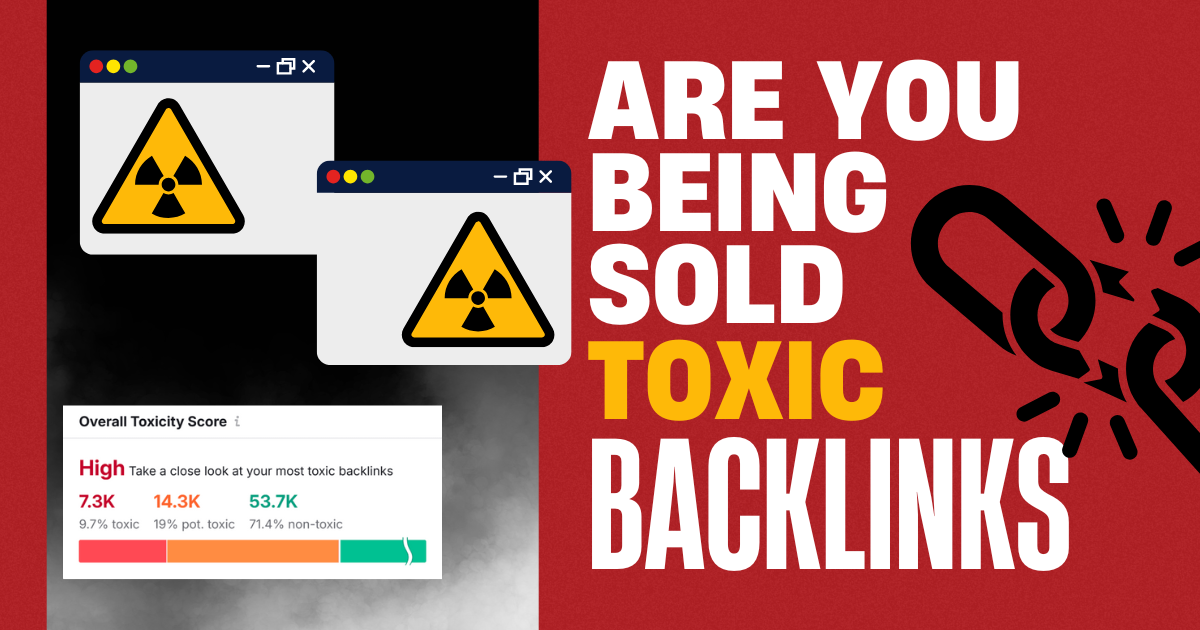
Backlinks are links pointing to your website. Some are healthy. Some are toxic. And some are “temporary help, long-term harm.”
Google is very clear that link spam includes things like using automated programs/services to create links and low-quality directory/bookmark links.
So, if your SEO vendor’s “strategy” relies on blasting your business into hundreds or thousands of directories, you need to slow down and ask better questions.
Why Backlinks Matter (and Why Bad Vendors Abuse Them)
Backlinks and citations can influence visibility — which is exactly why bad vendors try to game them.
A few quick stats to keep this grounded:
- Ahrefs found 96.55% of pages get zero organic traffic from Google. That’s why people chase shortcuts.
- BrightLocal reported 90% of experts say accurate citations are important for local rankings — so citations are real, but they must be done right.
- Large correlation studies consistently show backlinks/referring domains correlate with rankings — meaning vendors can “move numbers” fast with spam tactics, even if it’s risky.
Translation: Links matter — so unethical vendors manipulate links.
Say it louder for the people in the back...UNETHICAL VENDORS MANIPULATE LINKS!
The #1 risk: “Directory blitz” SEO – What This Looks Like
Many SEO vendors will:
- submit your business to tons of directories
- use automation software to do it quickly
- show you a report full of “new backlinks” and “new citations”
- and celebrate a short-term ranking bump
This can temporarily boost your organic position. It feels like progress.
What happens later (the part they don’t tell you)
When the contract ends, you find out:
- you don’t have logins to update those directories
- your name/address/phone (NAP) becomes inconsistent
- you’re stuck paying them to keep it accurate or paying someone else to untangle it
I’ve dealt with situations where a legacy directory vendor created thousands of backlinks/listings that were extremely difficult to remove or correct, and recovery took a long time. That’s the real cost of “cheap SEO.”
Toxic Backlinks vs. Legitimate Directories
✅ Healthy links and citations usually come from:
- real organizations people actually use (Chamber, associations, reputable platforms)
- relevant industry websites
- genuine partnerships, PR, outreach, and content mentions
🚫 Toxic links usually come from:
- spammy “everything directories”
- junk sites with scraped content and thousands of outbound links
- “networks” created only to pass link equity
- automated blasts of low-quality directory links (explicitly risky per Google’s link spam guidance)
Important Nuance:
Cleaning up toxic backlinks is a good thing, but creating the toxic mess in the first place (or locking you out of the listings) is the vendor problem.
Directory Ownership Horror Story: It Took Us Over a Year to Recover
We’ve seen this play out more than once — and we’ve lived it.
A company hires an SEO vendor and things look great at first. Rankings improve. Reports show “new backlinks” and “new citations.” Everyone’s happy.
But behind the scenes, the vendor is often doing something very specific:
- Submitting the business into hundreds or thousands of directories using automation
- Creating listings under vendor-controlled logins
- Providing no clear master list of where the business was submitted
- Leaving the client with no practical way to update or remove those listings later
When the relationship ends, the trap is revealed.
You don’t just lose “SEO help” — you inherit a mess:
- Incorrect business info starts spreading (old phone numbers, old addresses, wrong hours)
- Low-quality directories keep linking back to your site
- Fixing it requires manual cleanup, removal requests, spreadsheet tracking, and months of follow-up
In one case we dealt with, it took over a year to recover and flush out the bad backlinks and directory clutter created by black-hat-style tactics. Not because good SEO is slow — but because cleanup is slow when you don’t control the accounts and the links were created at scale.
Takeaway: If you don’t own the logins and access, you don’t own your online presence. And if a vendor’s strategy can’t be cleanly handed off, it’s not strategy — it’s a dependency tactic.
The 10 Questions That Expose Shady SEO Fast
1. “What will we own if we stop working together?”
Correct answer should include:
- All content
- On-page optimizations
- Landing pages
- Data & reports
- Access remains in your accounts
- Directory access so you can update your OWN listings that they submitted to
🚩 Red flag: “Some assets are proprietary.”
2. “Which accounts will be under our ownership vs yours?”
You should own:
- Domain & DNS
- Hosting (or at least admin access)
- Google Search Console
- GA4
- GTM
- Google Business Profile
🚩 Red flag: They insist on creating accounts under their email.
3. “Describe your link-building approach without buzzwords.”
Listen for:
- Digital PR
- Outreach
- Local citations (if relevant)
- Content-driven links
🚩 Red flags:
- “Network”
- “Guaranteed DA”
- “We control thousands of sites”
- Exact-match anchor guarantees
4. “Do you remove or control links if a client leaves?”
Only acceptable answer: “We build earned links that remain live.”
🚩 Any hesitation = walk away.
5. “What does success look like in the first 90 days?”
Good answer:
- Technical fixes
- Baseline crawl
- Content roadmap
- Early movement (not rankings promises)
🚩 Red flag: Ranking guarantees in under 60–90 days.
6. “How do you handle penalties or algorithm updates?”
Good answer:
- Preventative practices
- Monitoring
- Transparency
🚩 Red flag: “That never happens to our clients.”
7. “What SEO work continues to benefit us after month 6?”
You want:
- Evergreen content
- Technical foundation
- Brand authority
🚩 Red flag: “Ongoing link velocity is everything.”
8. “Can you show a report with both wins and losses?”
Ethical SEOs show:
- Pages that dropped
- Keywords that stalled
- What they changed in response
🚩 Red flag: 100% positive reports.
9). “Who actually does the work?”
Good answer:
- In-house specialists
- Named roles
🚩 Red flag: White-label mystery teams with no accountability.
10, “What happens if we pause for 3 months?”
Correct answer:
- Rankings may stabilize or soften
- Nothing breaks
- No retaliation
🚩
Red flag: “You’ll lose everything.”
Download the Directory Ownership Checklist (PDF)
Contract clauses you should require (non-negotiable)
Have this language in writing:
Ownership Clause
“All work product, content, optimizations, and data belong to the client upon payment.”
No Retaliation Clause
“Vendor will not remove, alter, or de-optimize any work after termination.”
Link Clause
“Vendor will not create or remove links intended to manipulate rankings.”
Access Clause
“All accounts remain under client ownership.”
If they resist this → 🚩
Ethical pricing ranges (reality check)
Typical ethical ranges for small–mid businesses:
- Local SEO: $750–$2,000/mo
- Content-led SEO: $1,500–$3,500/mo
- Aggressive national SEO: $3k–$6k+ (with proof)
🚩 Cheap SEO often equals dependency tactics or automation spam.
Are directories always bad?
No. Accurate citations can help local visibility. The issue is quantity-over-quality and lack of ownership.
What is a toxic backlink?
A link from a spammy or manipulative source. Google explicitly lists automated link creation and low-quality directory links as link spam examples.
If directory submissions can boost rankings, why can they hurt later?
Because bad vendors often create:
• outdated listings
• inconsistent business info
• low-quality placements
• and a login/access lockout that makes cleanup expensive
What is the safest link strategy?
Earned links via:
• content people reference
• outreach/PR
• relevant partnerships
• selective local citations you control
…and avoiding anything that smells like “networks” or “automation blasts” (which Google calls out as spam risk).
Fast vetting shortcut (my favorite)
Ask them:
“Could another SEO take over this account at any time without disruption?”
If the answer isn’t a confident “yes”, don’t hire them.
If you take one thing from this article, let it be this: good SEO is built on ownership, transparency, and strategies you can keep using—even if you change vendors. We’re committed to helping clients build SEO strategies and overall marketing strategies that work together, so you’re not chasing tactics—you’re building steady growth. If you’d like a second set of eyes on your current SEO, backlink profile, or directory listings, you can reach Marketing Angle at 785-577-2939 or info@marketing-angle.com.